Handwriting
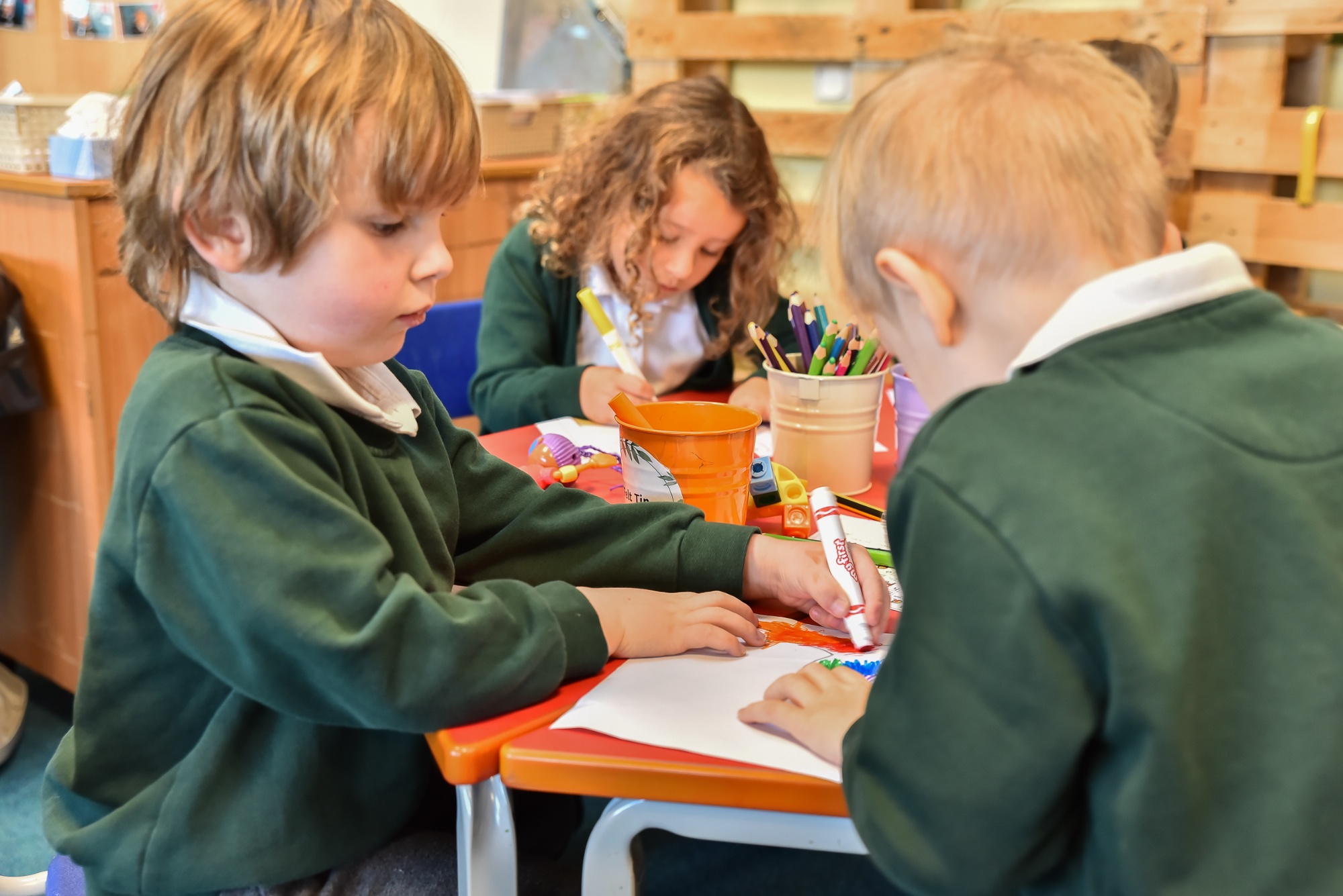
The importance of handwriting in developing pupils’ writing cannot be overstated.
Fluent handwriting is a significant predictor of positive writing outcomes, while a lack of such fluency can constrain pupils by:
• hindering their composition – the cognitive demands of handwriting can divert attention away from other elements of writing, such as planning, composing and revising
• reducing motivation – handwriting difficulties can make writing more effortful and frustrating, which may affect pupils’ motivation, especially if they lack support or alternative strategies to express their ideas
• preventing others understanding what they have written – poor handwriting devalues the content, with a detrimental impact: texts in poor handwriting are often assessed as being of lower quality
The Writing Framework (2025)
Therefore, a key objective at Parkview Primary School, is for all pupils to achieve automaticity in handwriting as soon as possible.
The Progression of Handwriting through our School
How do we teach handwriting in the Early Years Foundation Stage?
Children in our Early Years setting, “Start big to start small!”
By this we mean, we start by focusing on children's gross motor skills with activities like air writing and air pattern making. Children are encouraged to push large objects, climb, and balance, with a wide variety of resources in our setting to build body strength. The children engage in 'tummy time' regularly, with timetabled sessions to build their strength. This is simply, giving the children the chance to lay on their tummy!
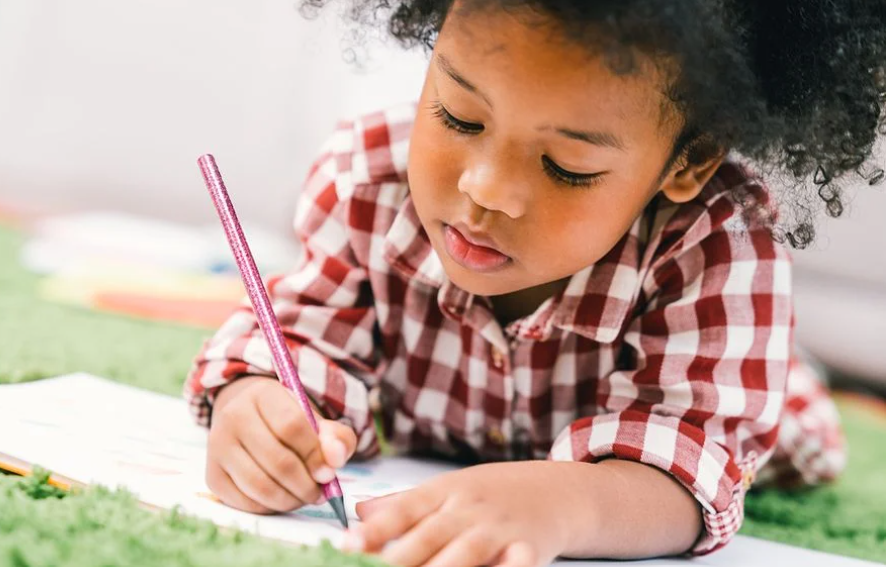
Once gross motor skills are secure, children are much better placed to develop their fine motor skills, which will enable them to pick up writing utensils.
Fine Motor Skills
Some activities used in the Early Years Stage to develop hand strength and enable children to learn how to grasp small objects:
- squeezing wet sponges
- finger painting
- water and rice play
- sand play
- play dough
- playing with a variety of textures e.g. cornflour and water
- fastening buttons, pulling up zips, threading, cutting, pinching clay.
- making collage pictures using pieces of wool or string
- decorating iced biscuits with small cake decorations
- posting small items into narrow necked bottles.
We also use the Write Dance/Squiggle and Dough Disco strategies to develop these skills. Please take a look at the videos here, which show these strategies in action. You can always have a go at home!
Write Dance/Squiggle
Dough Disco
Writing Position
As the children move through the Early Years Foundation Stage, they will learn to sit in the correct position to enable them to pick up a pencil and write:

They will also learn to pick up a pencil correctly using the ‘Nip, Pick and Flip’ method’ and then learn how to hold a pencil correctly using the ‘Tripod Grip’ to allow fluid movement of the nib:
'Nip, Flip, Grip'

The Tripod Grip
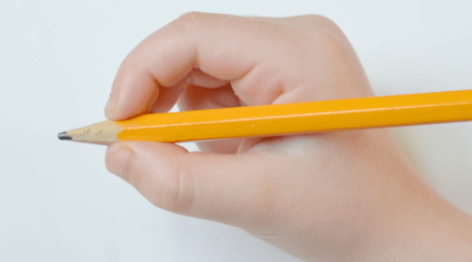
Children are encouraged to correct any errors in grip and will understand the language “patter” to describe pencil movements in preparation of letter formation. The children will understand that letters are written on a baseline and that all cursive letters ‘start on the line’ and ‘end with a hook’. They will learn that letters are part of “Letter Families” (shown below).
Each Early Years classroom has a ‘Writing Area’ to give status to their early writing.
By the end of the Foundation Stage, most children are able to use a pencil, holding it effectively to form recognizable letters, most of which are correctly formed using cursive handwriting.
What about left-handers?
Encourage your child to position their paper so they can see the tip of the pencil:
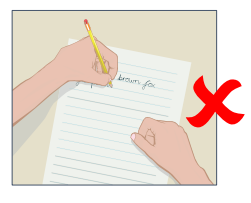
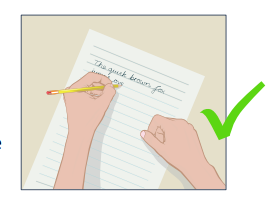
Left-handed children push the pencil rather than pulling it. Writing surfaces that are smoother, work better!
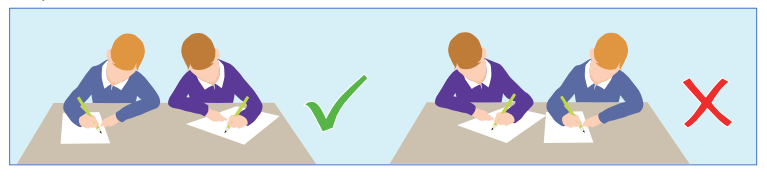
Left-handed pupils should sit to the left of a right-handed child so that they are not competing for space:
Cursive Handwriting
We adopt the cursive method of handwriting as this helps:
- Minimise confusion for the child as every letter starts on the line with an entry stroke and leads out with an exit stroke.
- It aids the left to right movements through each word across the page and helps develop a child's visual memory
- It helps sequencing and prevents reversals, inversions and omissions.
- It aids legibility, especially for those with motor and spatial difficulties, providing a motor training programme.
- Letters naturally flow into each other, it is impossible to write separate letters without joining, therefore it will eventually help them to increase the speed of their writing.
- Form spacing between words as the child develops whole word awareness
- A cursive style of handwriting is recommended by the British Dyslexia Association.
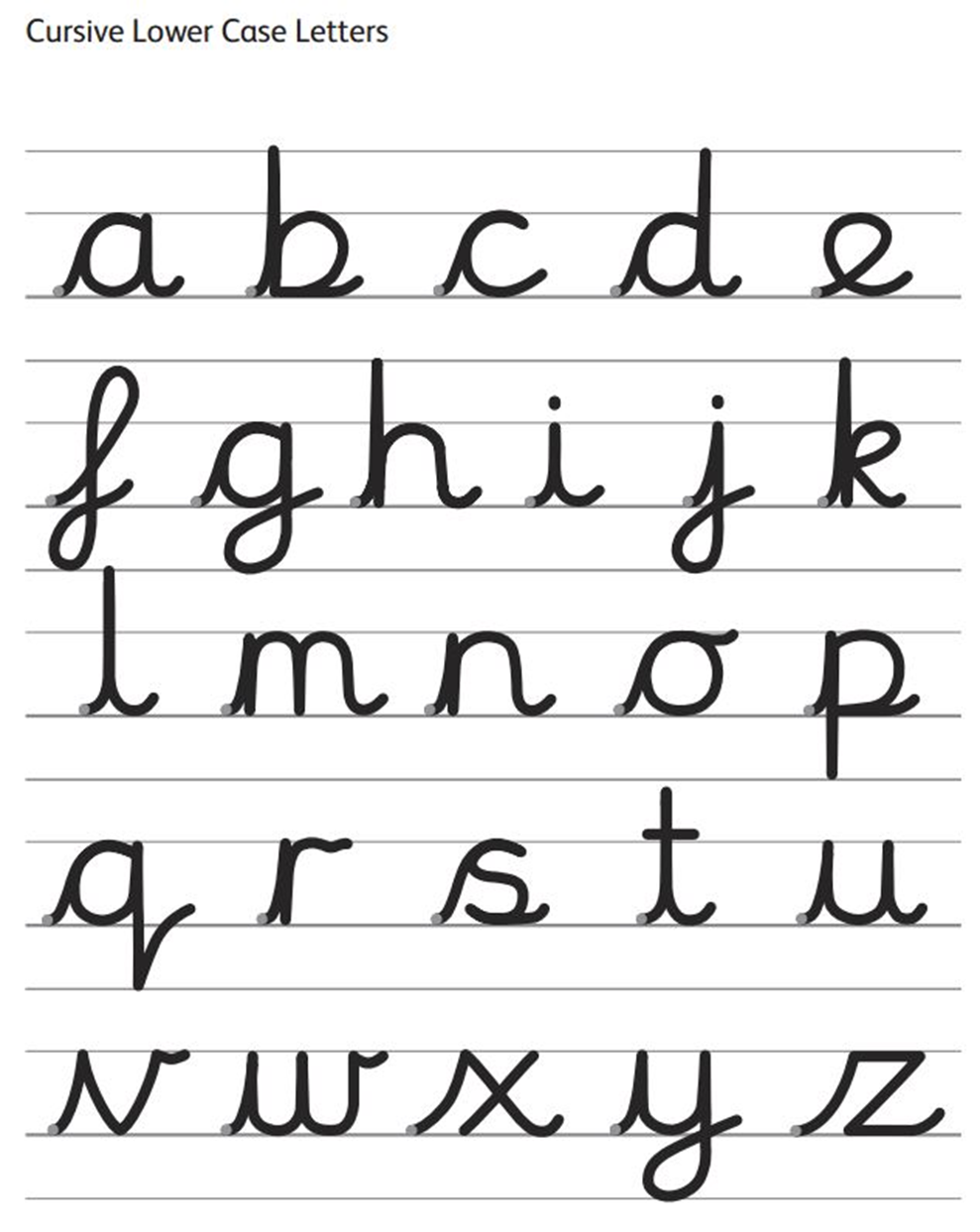
Letter groups and names your child will use:
Ascenders
b d f h k l t
Descenders
f g j p q y
Middle zone letters
a c e i m n o r s u v w x z
It is essential that children become fluent in their handwriting so they can focus on the content of their writing. The Writing Framework, 2025.
What should my child be able to do in each year group?
Key Stage One (Years 1 and 2)
In Year 1, the children will use the Read Write Inc program daily to learn to:
- sit correctly and use the right pencil grip
- form lowercase letters in the correct way: starting in the right place, moving the pencil in the correct direction and finishing in the right place
- form capital letters in the correct way
- forming the digits 0–9
- understand which letters are formed in similar ways
- to leave a space between words.
In Year 2, the children will use the Read Write Inc program daily to learn to:
- form lowercase letters of the correct size relative to one another
- start using some of the diagonal and horizontal strokes needed to join letters
- understand which letters, when next to one another, are best left unjoined
- write capital letters and digits in a size that matches the size of any lowercase letters
- understand which letters are formed in similar ways
- use the correct spacing between words.
Key Stage Two (Years 3, 4, 5 and 6)
In Year 3, the children will start developing fluent handwriting skills, making their writing more consistent and easier to read. They will practise:
- writing neatly and legibly with letters that are all a similar size
- joining some letters
- deciding which letters to join and which letters not to join
- keeping their writing lines horizontal and keeping the space between lines parallel and consistent
- keeping the downstrokes of their writing upright and parallel
- making sure that descenders of one line do not touch the ascenders of the line below.
In Year 4, the children will continue to work on their fluent handwriting skills, making their writing more consistent and easier to read. They will practise:
- writing neatly and legibly with letters that are all a similar size
- joining some letters
- deciding which letters to join and which letters not to join
- keeping their writing lines horizontal and keeping the space between lines parallel and consistent
- keeping the downstrokes of their writing upright and parallel
- making sure that descenders of one line do not touch the ascenders of the line below.
In Year 5, the children will develop fluent, joined-up writing. This includes:
- deciding whether or not to join specific letters
- keeping letters of a consistent size
- choosing whether it is best to write with a pen or a pencil.
In Year 6, the children will build on their Year 5 handwriting skills and continue to develop fluent, joined-up writing. This includes:
- writing neatly and clearly
- deciding whether or not to join specific letters
- choosing whether to use a pencil or a pen.
What if my child struggles with their handwriting?
Pencil grips and triangular pencils are used as a tool to encourage a good grip for children who struggle with pencil grip. These children are monitored so they do not hold the pencil too tightly, causing tension in the upper arm.
We use online resources on the Read Write Inc portal to address incorrect letter formation and handwriting joins. Teachers send these home with pupils so they can practise them and quickly move on! Please ask your child's class teacher for links to these if you think your child would benefit.
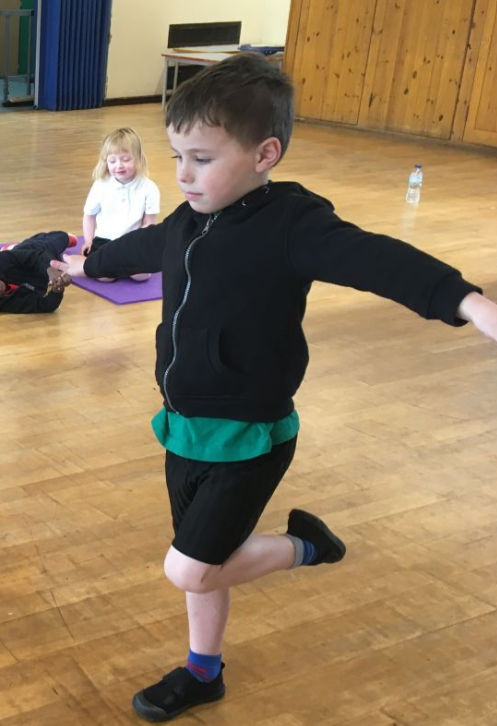
Some children take part in a weekly Physical Literacy intervention which focusses on improving gross motor, balance and core strength skills – allowing them to then move on to focussing on their fine motor skills.
Early Learning Goal Expected Standard in Writing (end of Reception)
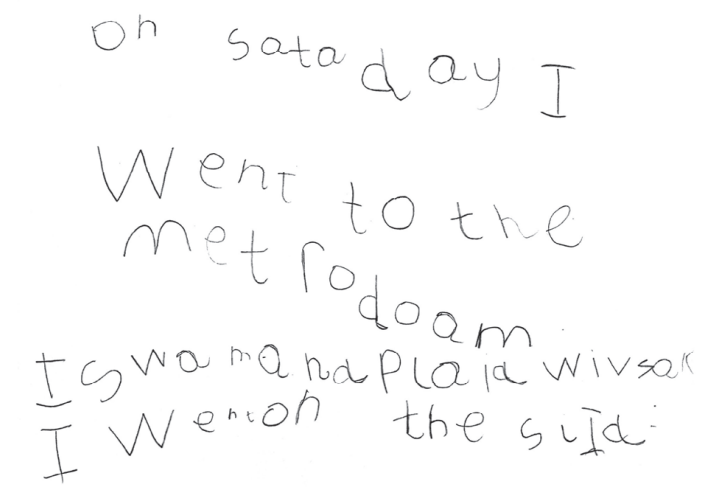
Year 2 Expected Standard:
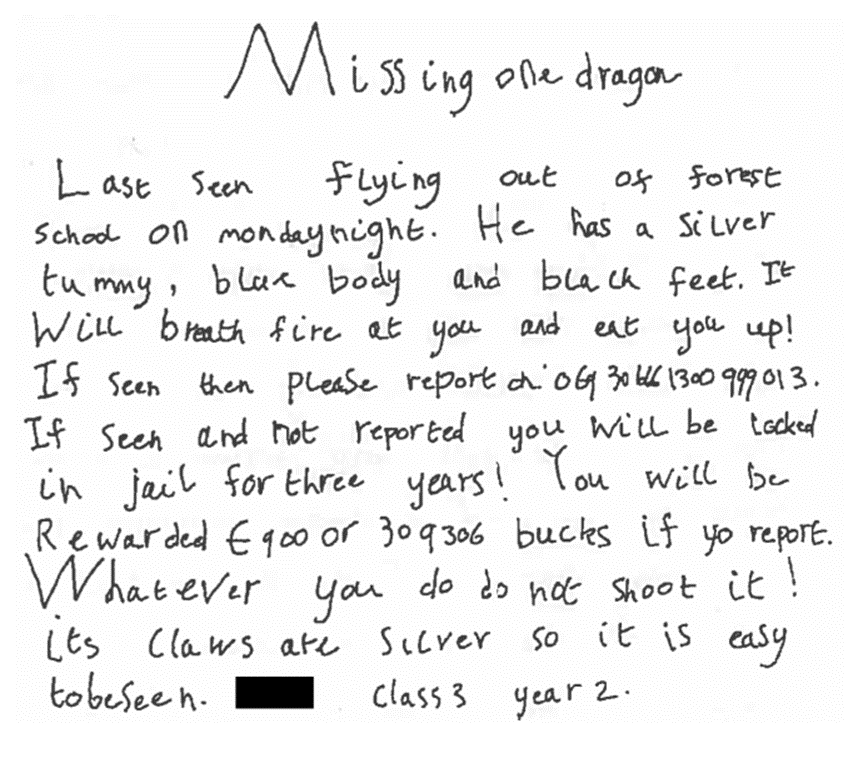
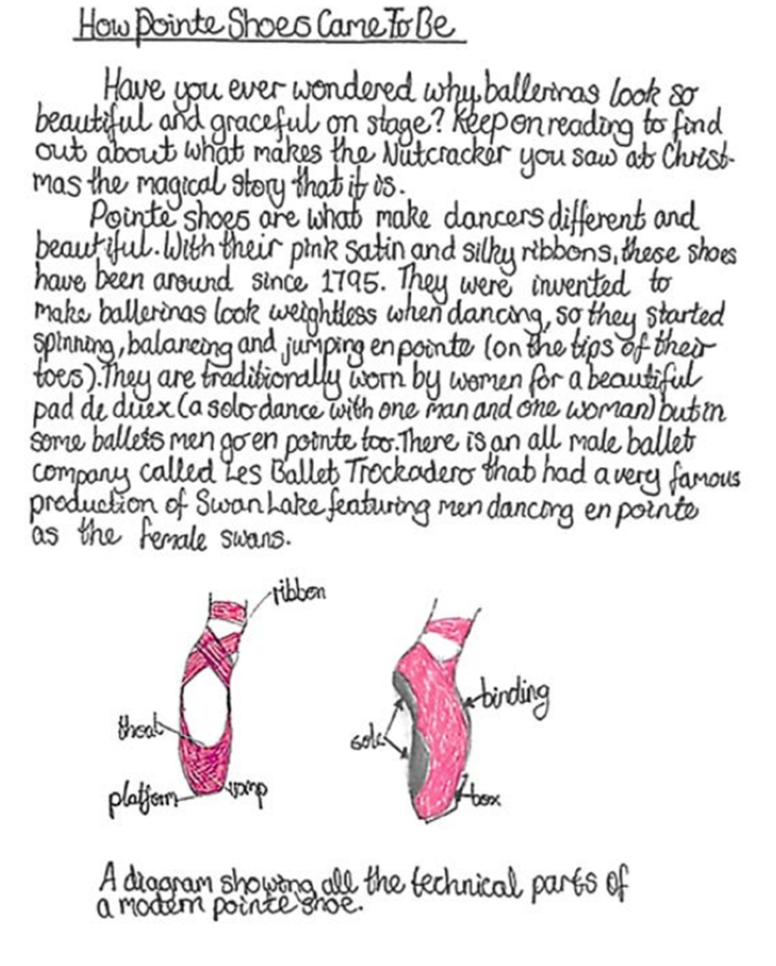
An example of the expected handwriting standard in Year 6: